Travel Tech · B2C + B2B
VBooking One travel platform, two sides — travelers and travel agents
Context
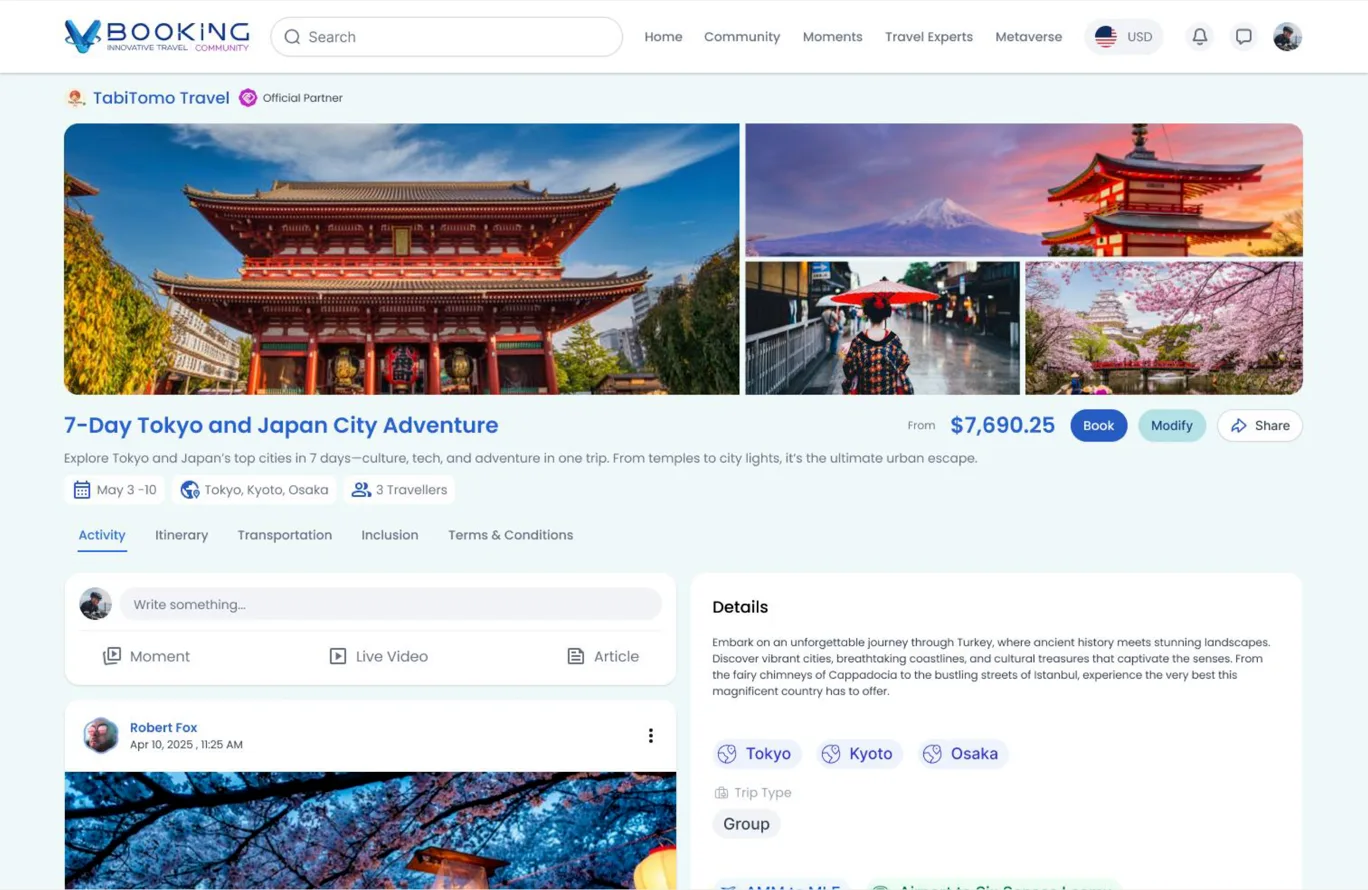
VBooking set out to unify a fragmented travel industry under one platform with two sides: Community, where travelers plan and book trips, and Turbo Suite, where travel agents build and sell them. Both sides meet on the same trip — a request from a traveler in Community lands as a lead in an agent's pipeline.
Problem
Travelers didn't know whose advice to trust, and putting a full trip together meant jumping between disconnected sites. Agents had the mirror problem: separate tools for search, quoting, CRM and finance, prices that went stale, and no single place to follow a lead from first contact to payment.
My Role
Lead UX/UI designer, solely responsible for the end-to-end design of both platforms — the Community web and mobile app, the AI trip planner and expert profiles on one side; the CRM pipeline, itinerary builder and Ask Genie assistant on the other — as the only designer across a fast-moving, multi-team build.
Two sides of one trip
- Community, for travelers: trust, and one place to plan.
- Turbo Suite, for agents: speed, and control over their own numbers.
01 — Community · For travelers
Three ways into a trip — and a real person behind every quote
The gap wasn't information — it was trust, and the lack of one recognized route to a real answer.
- Gave travelers three ways into planning — AI, manual, or a real travel expert — from the same entry point, after testing three layouts for surfacing the choice. A single buried link meant people defaulted to browsing alone.
- Designed the AI planner to produce a full day-by-day itinerary with a map before ever asking for payment, then let the traveler "Send Request" to turn that draft into a real, human-priced offer.
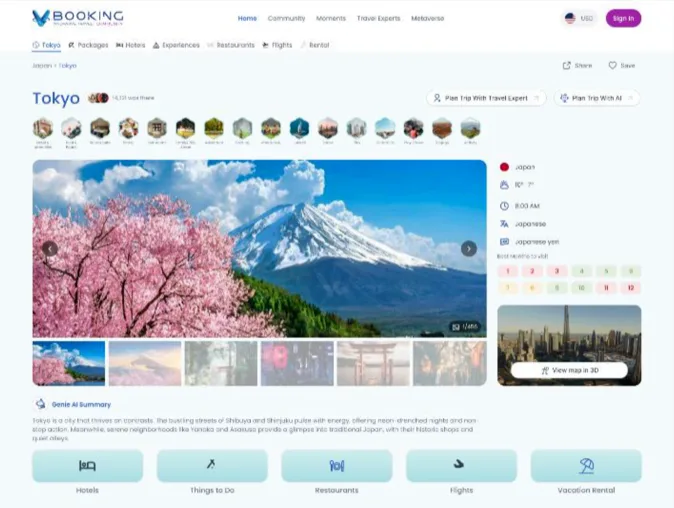
- Turned destination pages into one hub — hotels, activities, restaurants, car rental and articles together — instead of scattering them across sections.
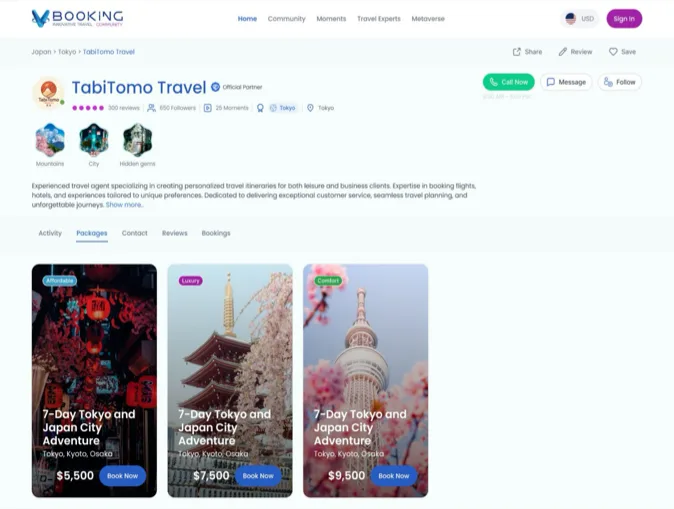
- Gave every travel expert and ambassador a public profile with reviews, followers and their own packages, so "who do I trust" is answered with the social proof people already rely on.
02 — Turbo Suite · For travel agents
One workspace from first contact to payment
Agents don't want delight — they want speed and control over their own numbers. Every decision was tested against "does this save a step".
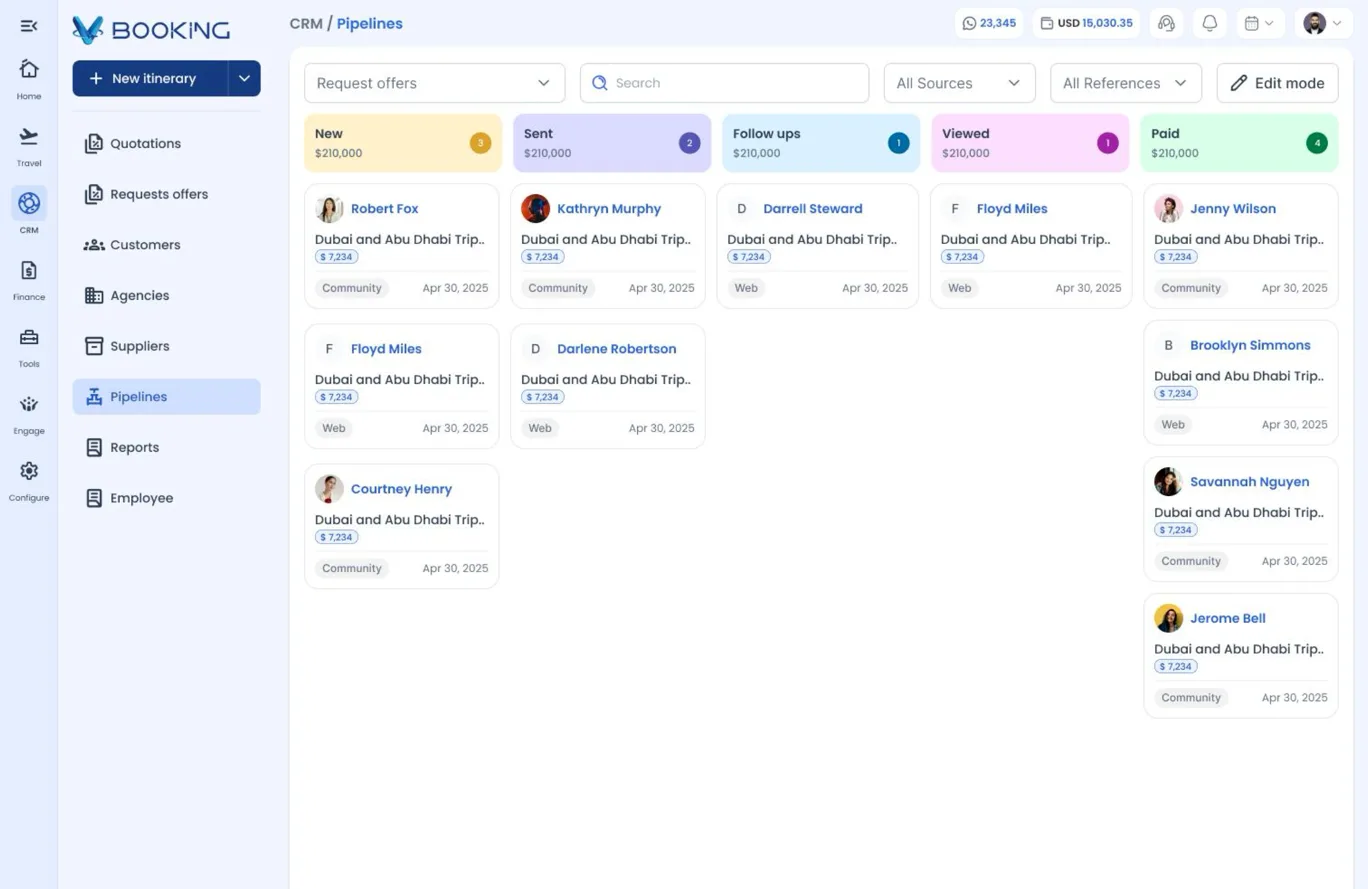
- Designed CRM pipelines that pull every incoming lead into one Kanban view (New → Sent → Follow ups → Viewed → Paid), so an agent never checks two systems to know where a deal stands.
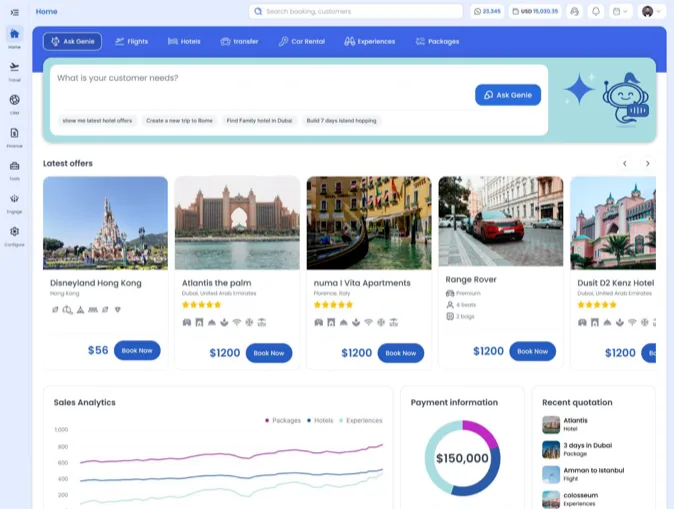
- Put real-time inventory and financial exposure — unpaid orders, contract limits, cancellations — on the home dashboard itself, since stale numbers were the exact complaint agents had.
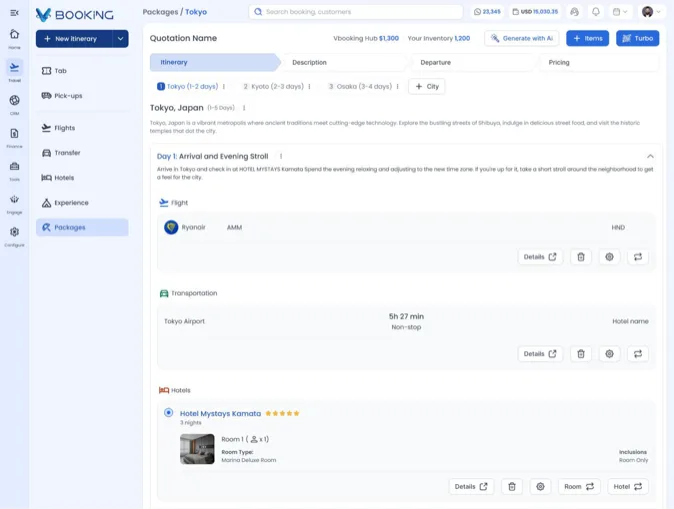
- Designed the itinerary builder day by day — flights, hotels, restaurants, transport — with a "Generate with AI" shortcut, so a client's ask becomes a priced multi-day package in minutes.
- Made Ask Genie a first-class tab in the workspace, not a side panel, so agents describe what a customer needs in plain language and get offers back immediately.
03 — Marketing site · The front door
One front door for a multi-product platform
VBooking sells many products to very different businesses. The homepage had to let each visitor find their own way in within a scroll.
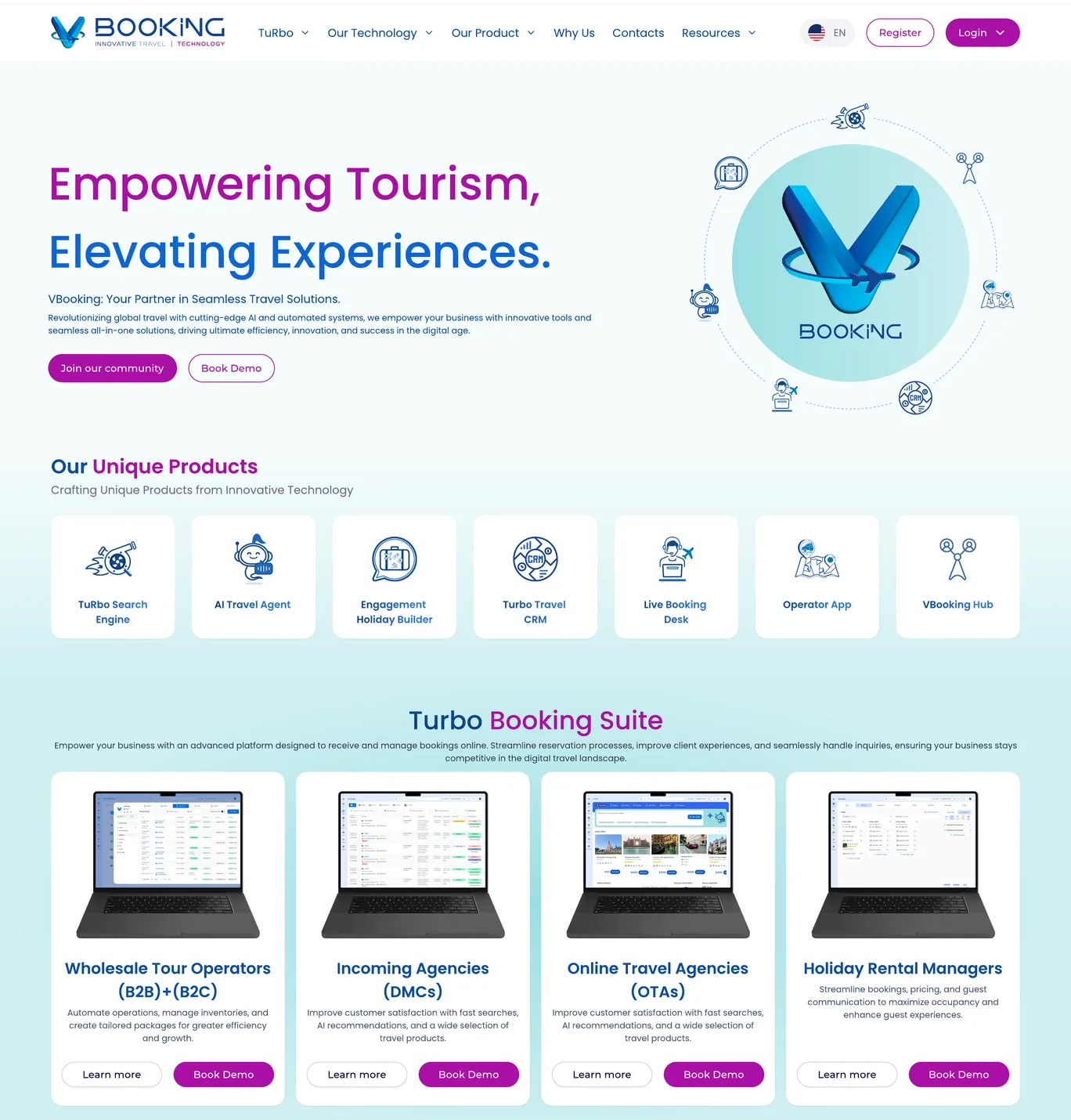
- Laid the products out as one row of tiles — search engine, AI agent, holiday builder, CRM and more — so the breadth of the platform reads at a glance before any detail.
- Presented Turbo Suite by who is buying — wholesale tour operators, incoming agencies, online travel agencies, holiday rental managers — each with its own pitch and a "Book Demo" beside "Learn more".
- Gave the community section role-based entry points — Traveler, Travel Expert, Travel Agent — so the marketing site hands each visitor straight into the right side of the platform.
Outcome
Both sides shipped as live betas, active but not yet open to the general market. Early use by real travelers and ambassadors validated the three-entry-point approach to planning, and working with real agents surfaced exactly where the old tool-hopping workflow still leaked into the new one — feedback now shaping the run-up to a full launch.
Reflection
Designing both platforms at once made it clear that a traveler, an ambassador and a travel agent are three different people even when they're looking at the same trip — the same UI would have flattened all three. Heavy competitor analysis across travel tech is what shaped where VBooking chose to differentiate: pairing AI planning with a real human behind every quote, and a unified CRM pipeline instead of copying what every other booking tool already did.